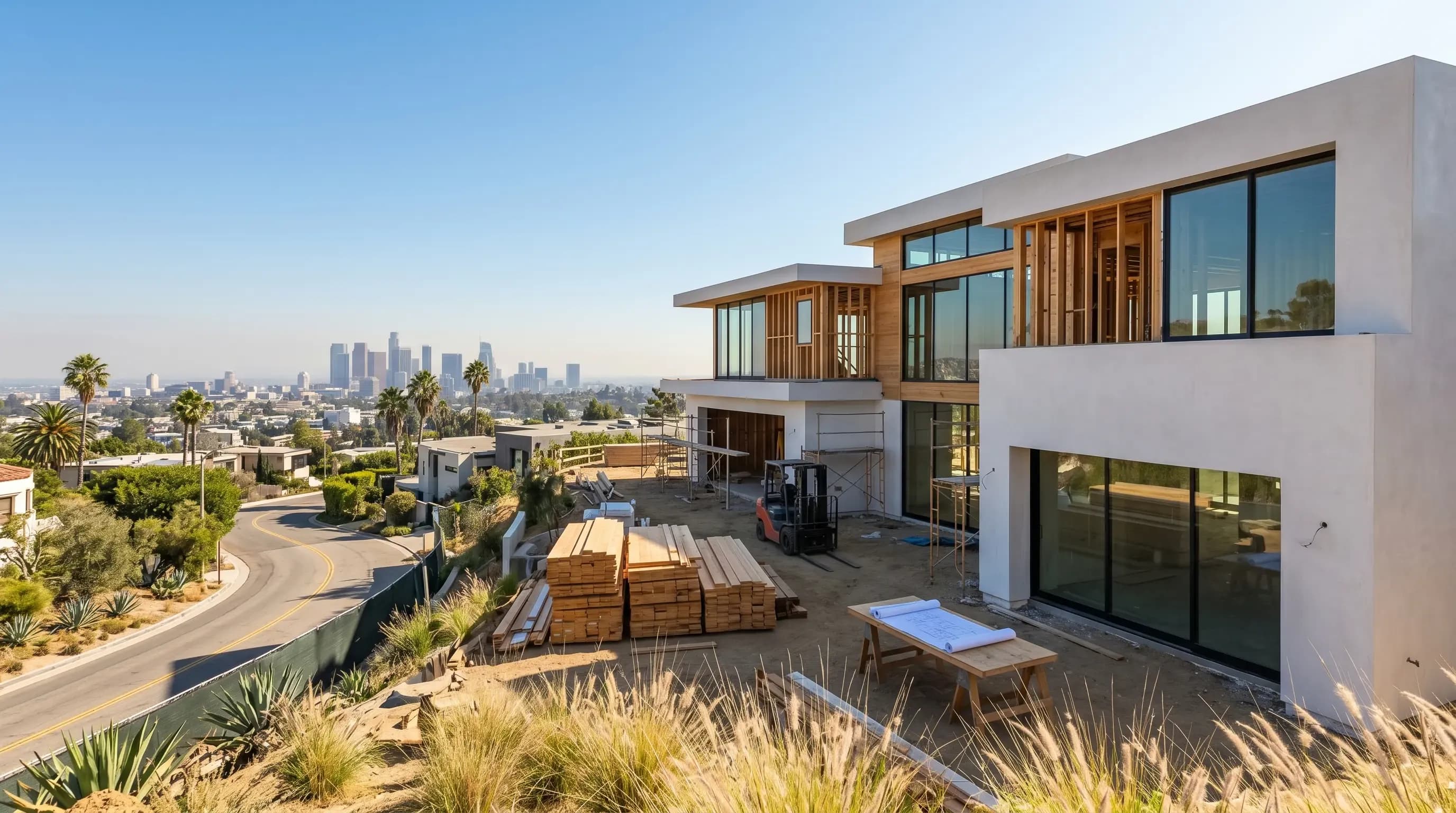
Building a custom home in Los Angeles is the ultimate expression of personal success and architectural vision. From the sun-drenched hills of Hollywood to the coastal breezes of the Pacific Palisades, designing a home perfectly tailored to your lifestyle is a dream for many.
However, transforming a vacant lot into a luxury estate is a complex journey that requires meticulous planning, a deep understanding of local regulations, and the right team to bring your vision to life. This guide will walk you through the essential steps of building a custom home in LA, giving you the clarity and confidence to embark on this exciting project.
What Makes Building a Custom Home in Los Angeles Unique?
Building a home in Los Angeles is completely different from building anywhere else in the country. Before you even break ground, it is crucial to understand the specific local challenges and requirements that will shape your project.
- Strict Zoning and Regulations: The Los Angeles Department of Building and Safety (LADBS) enforces some of the most rigorous building codes in the nation. Navigating the red tape requires local expertise to avoid massive delays.
- Seismic Requirements: Southern California is earthquake country. Your home’s structural engineering must incorporate advanced seismic retrofitting, deep foundations, and specific framing techniques to ensure safety and compliance.
- Diverse Architectural Landscape: LA is a global hub for design. Whether you are building a sleek Contemporary Organic retreat, a classic Spanish Colonial, or a Mid-Century Modern masterpiece, your design must not only reflect your taste but also complement the neighborhood's aesthetic and historical context.
Phase 1: Planning and Pre-Construction
Step 1: Define Your Vision and Lifestyle Goals
Every great home starts with a clear vision. Before drafting blueprints, determine exactly how you want to live in your new space. Consider your daily routines, long-term plans, and absolute must-haves.
- Do you want seamless indoor/outdoor living with disappearing glass walls?
- Are you looking to include modern wellness features like a cold plunge, sauna, or home gym?
- Do you need an integrated ADU (Accessory Dwelling Unit) for aging parents or guests? Gathering inspiration from platforms like Houzz or Pinterest and organizing your priorities early on will make the architectural phase much smoother.
Step 2: Establish a Realistic Los Angeles Budget
Cost transparency is critical. In 2026, building a custom luxury home in prime Los Angeles neighborhoods typically starts between $600 to $1,000+ per square foot, depending on site conditions and high-end finishes. It is vital to understand the difference between your project's costs:
- Hard Costs: The physical materials and labor required to build the home (lumber, concrete, fixtures, contractor fees).
- Soft Costs: The fees associated with getting the project off the ground (architectural design, structural engineering, soil reports, LADBS permit fees, and insurance).
Step 3: Secure Your Financing
Financing a ground-up build is different from buying an existing house. Instead of a traditional mortgage, you will typically need a construction loan. These loans are short-term and release funds in "draws" tied to specific construction milestones (e.g., pouring the foundation, completing the framing).
Once the home is finished and receives a Certificate of Occupancy, the construction loan is usually converted or refinanced into a standard permanent mortgage.
Step 4: Assemble Your Expert Team (Design-Build vs Traditional)
Traditionally, homeowners hire an architect to design the house and then bid the plans out to a general contractor. This often leads to miscommunication, budget overruns, and delays when the architect's vision doesn't align with practical construction costs.
The smarter alternative for a Los Angeles build is the Design-Build approach. By partnering with Saga Home Builders, you get architecture, engineering, and construction under one roof. Our unified team ensures that your home is designed to fit your exact budget from day one, streamlining communication and speeding up the entire project lifecycle.
Phase 2: Land Acquisition and Feasibility
Step 5: Site Selection and Feasibility Studies
Finding the perfect lot is about more than just the view; it is about buildability. Before purchasing land, an experienced builder must conduct a thorough feasibility study. Crucial factors in Los Angeles include:
- Topography and Lot Slope: Flat lots are rare. Sloped lots require massive retaining walls, precise grading, and complex drainage systems.
- Soil Reports: Geotechnical engineers must test the soil to determine if it can support the weight of your home or if expensive caissons (deep foundation pillars) are required.
- Utilities: Are water, sewer, and power lines readily accessible, or will they need to be trenched in from far away?
Step 6: Navigating Hillside Ordinances and Coastal Zones
Depending on your zip code, you may encounter unique regulatory overlays. If you are building in the Hollywood Hills, you must comply with the Baseline Hillside Ordinance (BHO), which strictly limits the size, height, and grading volume of your home.
If your lot is in Venice or Malibu, you will likely need approvals from the California Coastal Commission, a notoriously lengthy process. Additionally, certain older neighborhoods are protected by Historic Preservation Overlay Zones (HPOZ), which dictate what the exterior of your home can look like.
Phase 3: Design and Permitting
Step 7: Architectural Design and Engineering
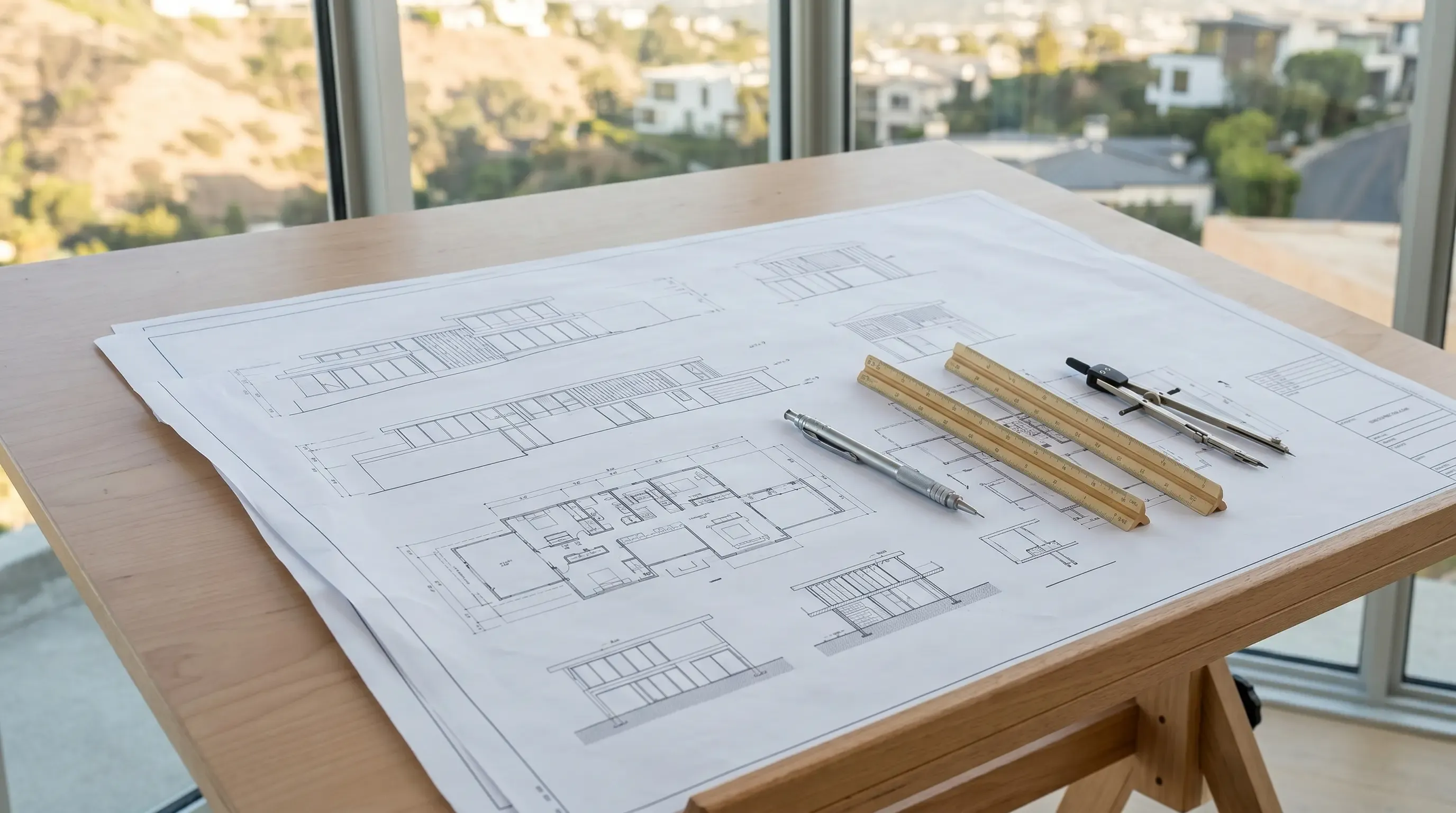
Once your team and lot are secured, the creative process truly begins. We start with conceptual designs and floor plans, gradually refining them into detailed schematics.
In the design-build model, our construction experts review these plans in real time to ensure they are actually "buildable" and remain within your budget. Finally, structural, civil, and mechanical engineers finalize the technical blueprints required for city approval.
Step 8: Surviving the LADBS Permitting Process
The Los Angeles Department of Building and Safety (LADBS) permitting process is famous for being rigorous and time-consuming. Securing the necessary clearances for grading, building, plumbing, and electrical can take anywhere from 6 to 12 months (or more for hillside/coastal lots).
A premium contractor anticipates the city's requirements, submits flawless documentation, and leverages established relationships with city planners to expedite clearances, keeping your project moving forward while others get stuck in red tape.
Phase 4: The Construction Process
Step 9: Site Preparation and Foundation
With permits finally in hand, the physical transformation begins. Site preparation involves clearing the lot of existing structures, trees, and debris. From there, heavy machinery is brought in for grading. In Los Angeles, especially on sloped lots, this is a highly engineered process.
If you are building on a hillside, this step involves drilling deep into the bedrock to install caissons (reinforced concrete pillars) and constructing massive retaining walls to ensure the earth doesn't shift. Once the ground is prepped and stabilized, the foundation is poured, setting the literal groundwork for your luxury estate.
Step 10: Framing, Rough-Ins, and Exterior Work
Next, the "skeleton" of your home goes up. Whether using premium lumber or structural steel for those massive open-concept spans, the framing stage is where you finally see the volume and shape of your home. Following the framing, the "rough-ins" occur: specialized trades install the complex network of plumbing, electrical wiring, and high-efficiency HVAC systems inside the walls.
Because Southern California requires strict energy compliance (Title 24), this phase also includes top-tier weatherproofing, insulation, and the installation of energy-efficient windows and doors.
Step 11: Interior Finishes and Smart Home Integration
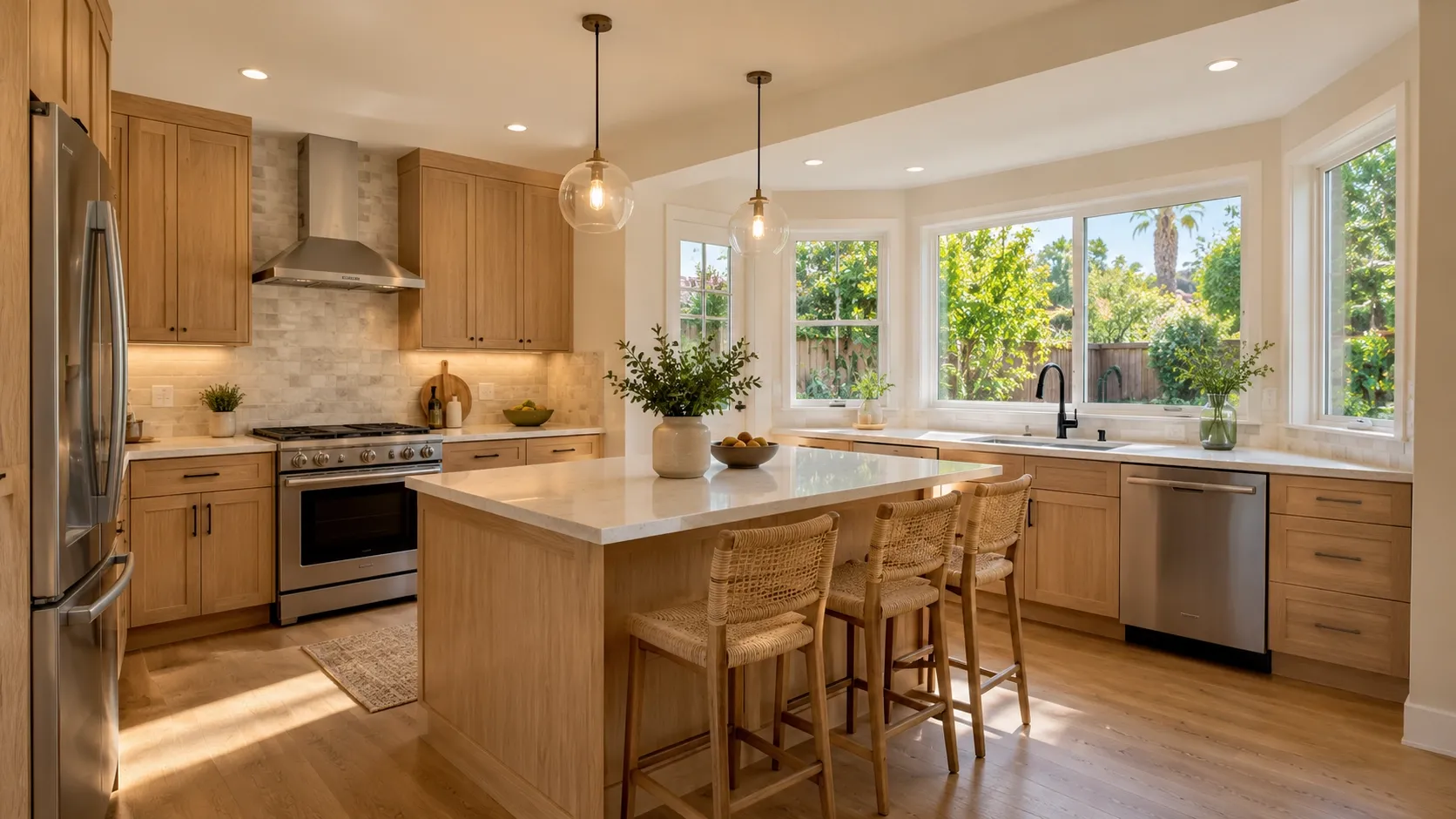
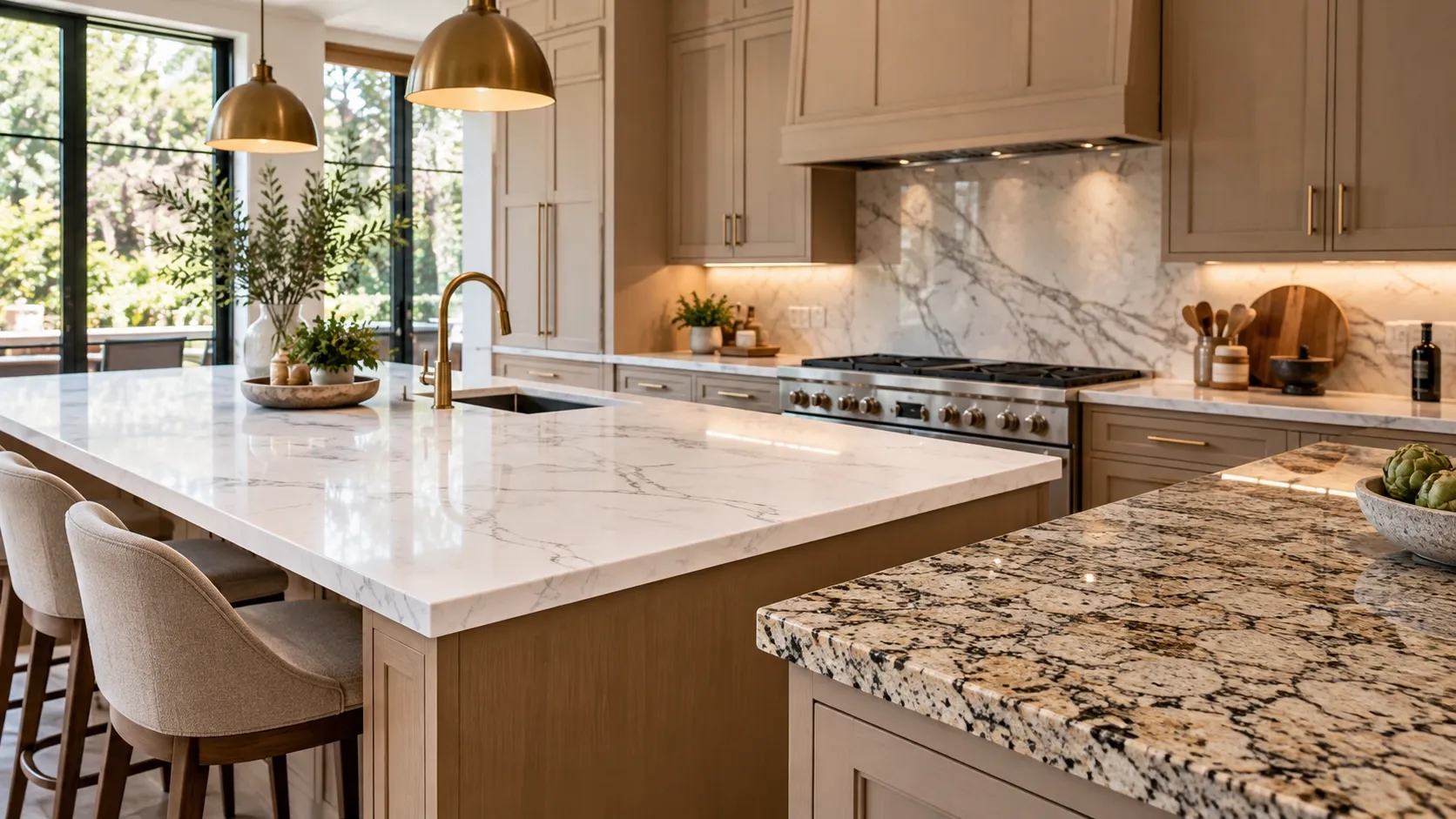
Once the drywall is up, your house begins to look like a home. This is the most visually exciting phase of construction. Luxury flooring is laid, custom cabinetry is installed, and intricate tile work transforms your spaces.
If you are curious about high-end culinary spaces, check out our guide on Kitchen Remodeling Trends.
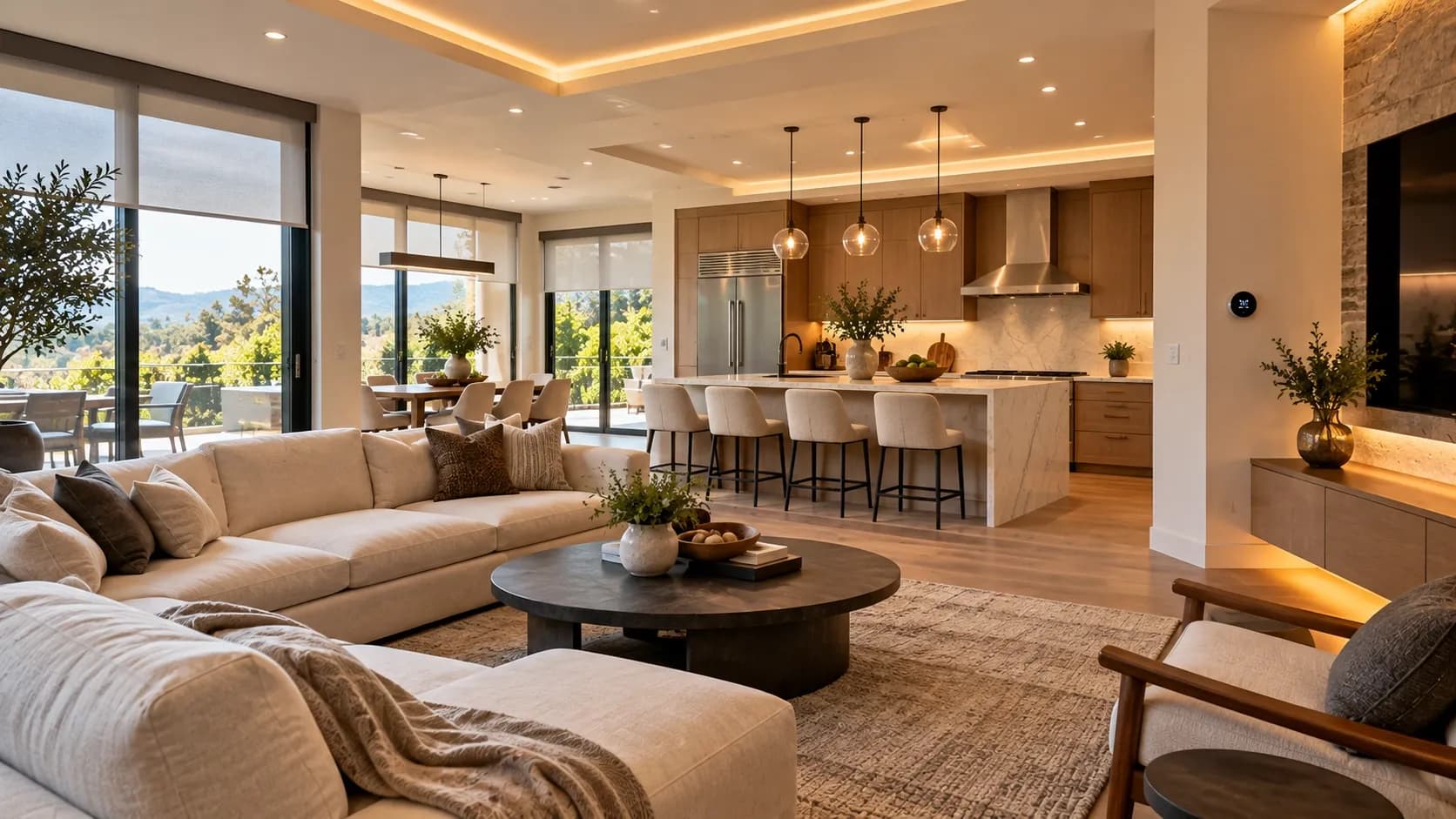
During this stage, low-voltage wiring is also finalized to support 2026's smart home integrations. Everything from automated climate control and motorized window shades to integrated security and whole-home audio is seamlessly built into the architecture, ensuring your home is as intelligent as it is beautiful.
Phase 5: Completion
Step 12: Final City Inspections and Certificate of Occupancy
Before you can pop the champagne, the home must pass a rigorous series of final inspections by the Los Angeles Department of Building and Safety (LADBS). Inspectors will review everything from structural safety to electrical loads and energy efficiency.
An experienced design-build contractor manages this final gauntlet smoothly. Once all inspections are passed, the city issues a Certificate of Occupancy (C of O), making your home legally ready for you to move in.
Step 13: The Final Walkthrough and Move-In
The last step before handing over the keys is the final walkthrough. Alongside your Saga Home Builders project manager, you will tour the completed home to ensure every detail meets our uncompromising standards.
We create a "punch list" for any minor touch-ups—such as a paint scuff or a slight cabinet adjustment. Once the punch list is cleared and the final exterior landscaping is planted, it is time to move in and enjoy the LA lifestyle in a home built perfectly for you.
Hidden Costs to Watch Out for When Building in LA
Transparency is the foundation of a successful build. Many homeowners get blindsided by "hidden" costs because inexperienced contractors fail to mention them upfront. When building a custom home in Los Angeles, you must budget for:
- Exporting Dirt: If your design requires excavating a basement or cutting into a hillside, that dirt has to go somewhere. Exporting and hauling soil out of crowded LA neighborhoods is incredibly expensive due to labor, trucking, and disposal fees.
- Retaining Walls and Shoring: As mentioned, hillside lots require intense structural support before the house is even built. Shoring up a canyon lot can easily add hundreds of thousands of dollars to your baseline costs.
- Premium Material Surges: The demand for imported luxury materials—such as Italian marble, specialized European hardwoods, or custom steel-framed doors—can fluctuate in price due to global supply chain shifts.
- Utility Upgrades: Building a 6,000-square-foot smart home on a lot that previously held a 1,500-square-foot cottage often requires upgrading the municipal power grid connection, water meters, or sewer lines to handle the new capacity.
2026 Design Trends for Los Angeles Custom Homes
If you are designing a home for the future, you need to know what features are defining Southern California luxury right now. Here is what highly discerning LA homeowners are asking for in 2026:
- Integrated ADUs: Accessory Dwelling Units are no longer afterthoughts. They are being architecturally integrated into the initial build for use as luxury guest houses, recording studios, or private remote workspaces.
- Wellness Suites: The standard home gym has evolved into full wellness centers featuring infrared saunas, cold plunge pools, steam showers, and massage rooms. See how we integrate these in our Bathroom Remodeling projects.
- Flush-Track Sliding Doors: The ultimate indoor-outdoor living experience requires massive glass walls that disappear into pocket walls on flush tracks, seamlessly merging the living room with the pool deck.
- The Scullery (Prep Kitchen): With open-concept kitchens acting as the main entertaining space, luxury builds now include hidden prep kitchens to keep the mess completely out of sight.
- Eco-Luxury & Net-Zero Tech: High-end buyers are demanding sustainability. Solar-integrated roofing, hidden battery walls, and greywater recycling systems are becoming standard features in new construction.
Conclusion: Ready to Build Your Dream Home?
Building a custom home in Los Angeles is a monumental undertaking, but with the right team, it is also one of the most rewarding investments you will ever make. For over 20 years, SAGA Home Builders has delivered trusted construction solutions across Los Angeles with integrity, precision, and lasting quality.
With over 150 completed projects and a 100% client satisfaction rate, our seamless Design-Build process eliminates the stress of disjointed contractors and surprise costs. From navigating strict LADBS permits to executing flawless architectural details, we manage every step of the journey.
Ready to turn your vision into a Los Angeles landmark? Contact SAGA Home Builders today for a free consultation.
Frequently Asked Questions
On average, building a custom home in Los Angeles takes between 18 to 36 months from initial concept to move-in. The design and permitting phase alone can take 6 to 12 months due to LADBS backlogs and specialized approvals.
In 2026, the cost to build a luxury custom home in Los Angeles generally starts around $600 to $1,000 per square foot for the build itself. However, for ultra-high-end projects in prime neighborhoods featuring complex hillside engineering and imported materials, costs can easily range from $1,200 to $1,500+ per square foot.
Absolutely. Hillside construction is an entirely different beast compared to building on a flat lot. You need a specialized contractor who understands geotechnical engineering, caisson drilling, severe grading, complex drainage systems, and the strict regulations of the Baseline Hillside Ordinance (BHO).
If you are doing a ground-up new construction (tearing down the existing house to build a new one), no, you cannot live on the property. The site will be an active construction zone without functioning utilities, plumbing, or safe access.