A tub-to-shower conversion can support resale value when it improves function, updates the bathroom, and fits the home’s buyer profile. However, removing a bathtub is not always the best choice, especially if it is the home’s only tub.
A well-planned shower conversion can make a bathroom feel more spacious, accessible, and modern. It can also improve everyday use for homeowners who prefer quick showers over soaking baths. At the same time, resale value depends on more than one bathroom feature. The number of bathrooms, overall home layout, neighborhood expectations, and likely buyers all matter.
How a Tub-to-Shower Conversion Can Affect Resale Value
A tub-to-shower conversion can influence how buyers view a bathroom, but it does not automatically increase a home's resale price. The quality of the remodel and the needs of potential buyers are more important than simply replacing one fixture with another.
A dated tub surrounded by worn tile may make a bathroom feel older than it is. Replacing it with a properly designed shower can create a cleaner, more contemporary appearance. A spacious shower can also make the room easier to use.
However, removing every bathtub in a home can limit its appeal to some buyers. Families with young children may prefer having at least one tub available. For that reason, the resale impact depends heavily on whether another bathtub remains elsewhere in the home.
The goal should be to create a bathroom that works well today while remaining appealing to a broad range of future buyers.
When Converting a Tub to a Shower Makes Sense
Converting a bathtub can be a practical improvement when the existing layout no longer matches how the bathroom is used. Several factors can make a shower conversion particularly useful.
Improving Bathroom Function and Accessibility
Showers are often easier to enter and exit than standard tubs. A low-threshold or walk-in shower can reduce the need to step over a high tub wall, making the space more convenient for many adults.
This does not mean every shower should be designed specifically for accessibility. Instead, homeowners can consider features such as a comfortable entry, appropriate grab-bar blocking, a handheld showerhead, and a well-designed shower floor.
These details can improve everyday usability without making the bathroom look institutional.
Creating a More Modern Bathroom Design
A bathtub can take up a significant visual area in a bathroom. Replacing it with a modern shower can create a cleaner appearance and provide more opportunities for updated tile, glass, fixtures, and lighting.
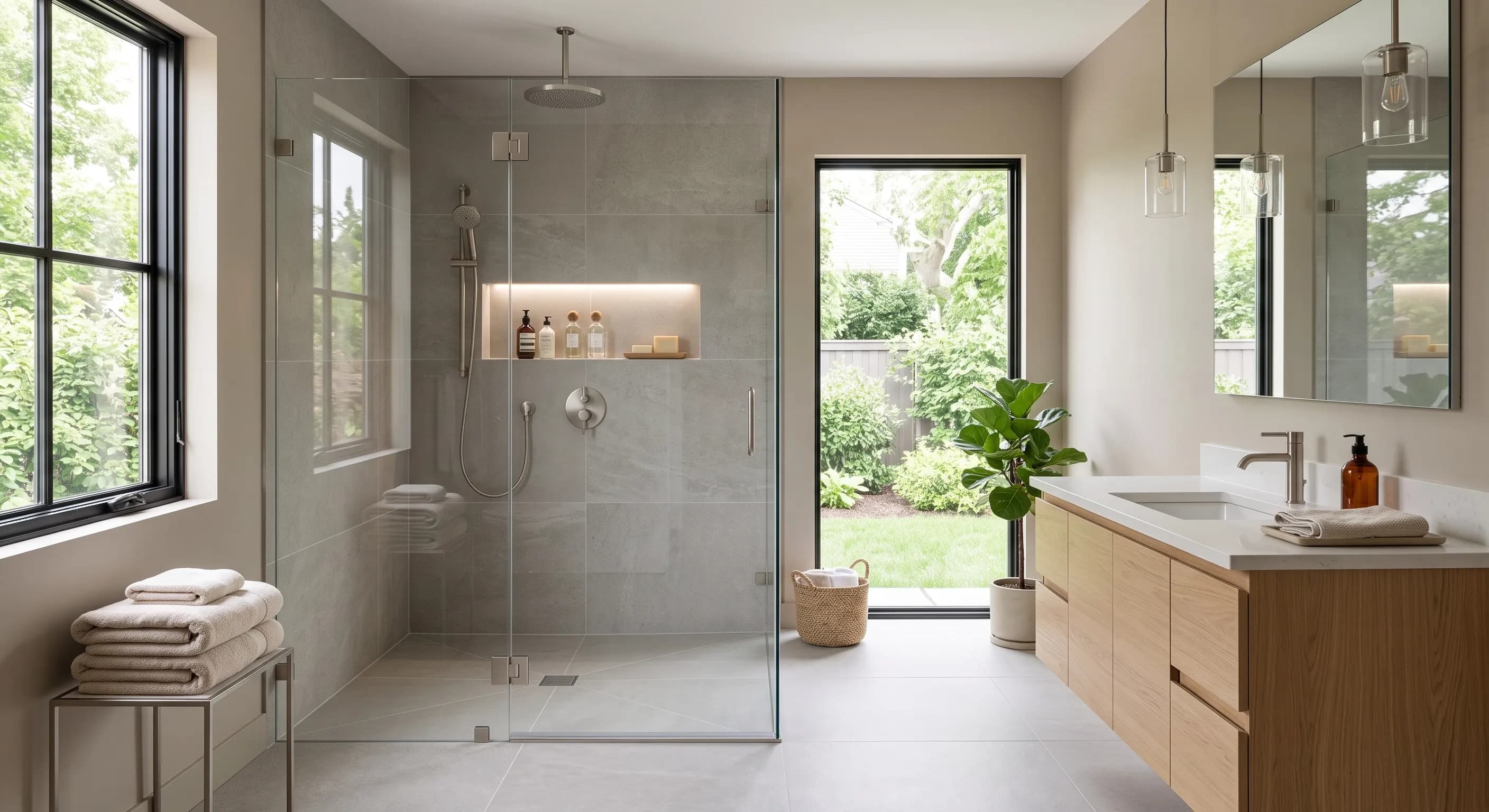
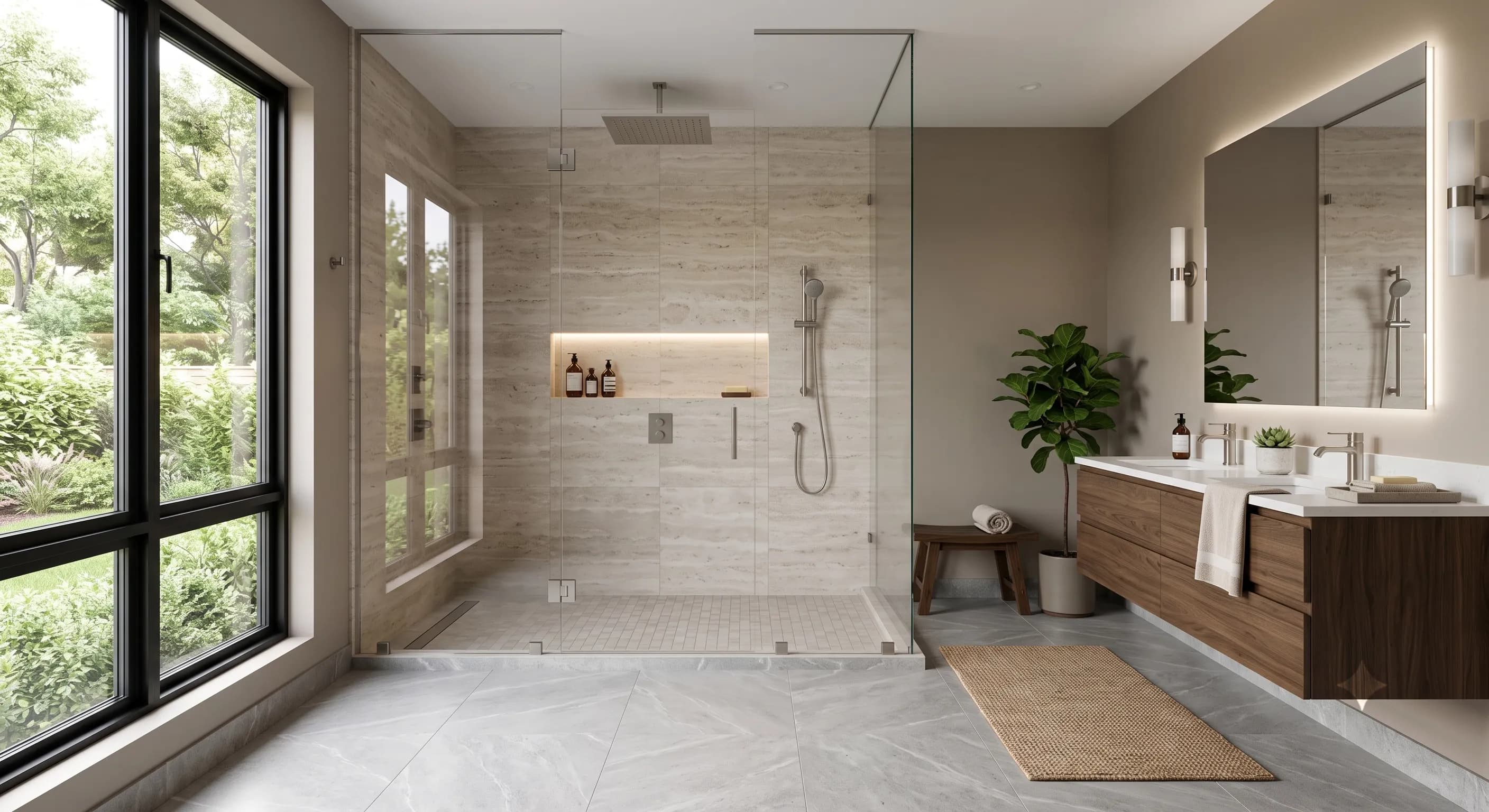
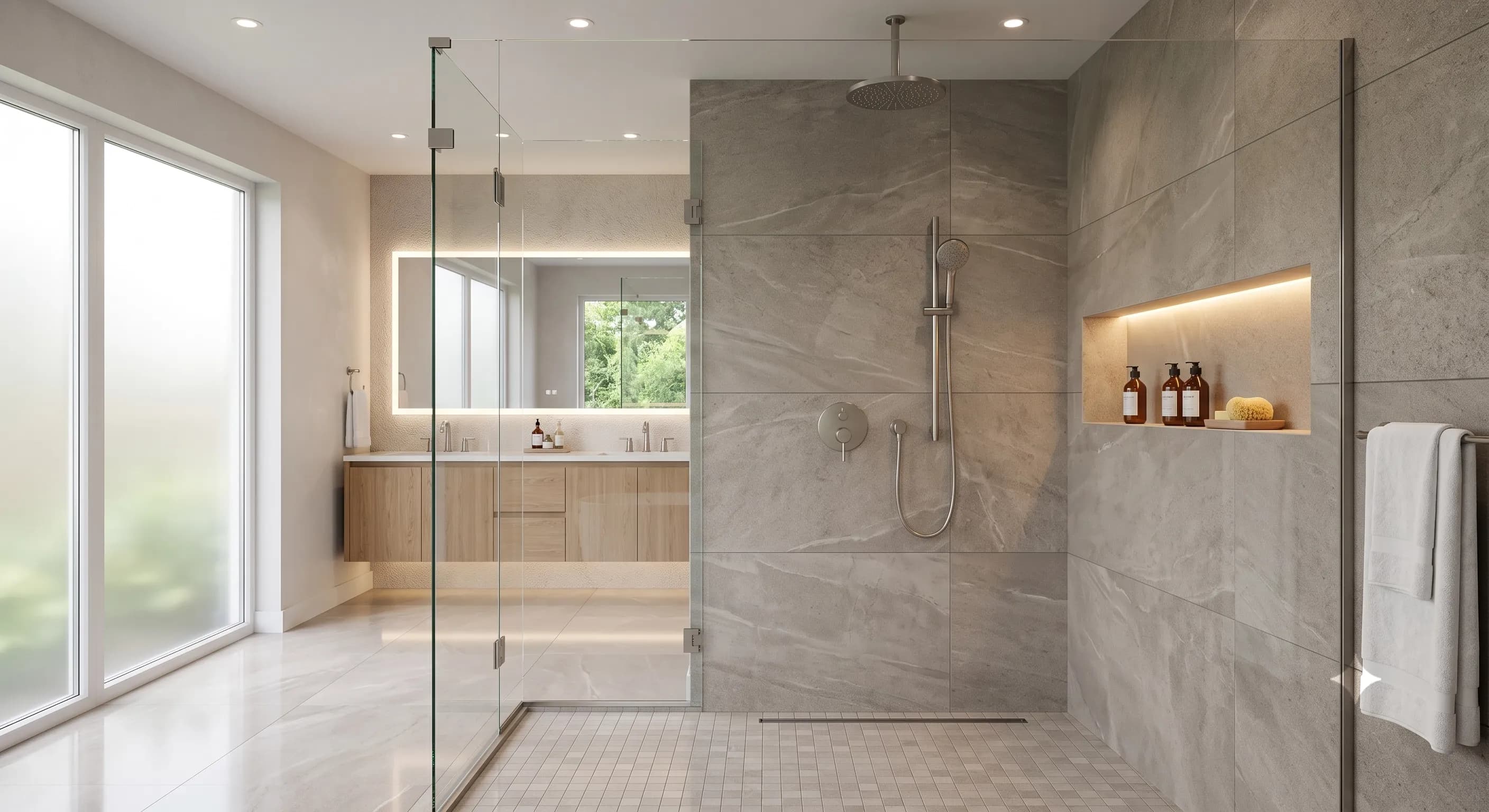
A frameless or minimally framed glass enclosure, coordinated wall tile, and a recessed niche can create a polished modern shower design. For homeowners planning a larger update, the conversion can also become part of a broader bathroom remodeling project.
The key is to make the new shower feel intentional rather than like a bathtub was simply removed and replaced.
Making Better Use of Limited Bathroom Space
In a smaller bathroom, changing the tub configuration can improve how the available space feels and functions. A carefully planned shower may create better circulation and make the room appear less crowded.
The layout still matters. Door placement, shower dimensions, vanity clearance, storage, and plumbing locations should be considered together.
For smaller spaces, homeowners can also explore space-saving bathroom design ideas that complement a tub-to-shower conversion.
When Keeping a Bathtub May Be Better for Resale
A shower is not automatically better than a bathtub from a resale perspective. In some homes, keeping a tub can preserve flexibility for future buyers.
Family-Friendly Bathroom Needs
Families with young children often find bathtubs useful for bathing children. A home marketed toward families may benefit from having at least one full bathroom with a tub.
This does not mean the primary bathroom must retain its bathtub. In some layouts, converting the primary bath while keeping a tub in another full bathroom can provide both modern shower space and family-friendly functionality.
Think about the entire home rather than evaluating the bathroom in isolation.
Preserving the Home's Only Bathtub
If the home has only one bathtub, removing it deserves more consideration. While some buyers may prefer showers, others may specifically want a tub.
Preserving the only bathtub can help maintain broader functionality without preventing you from creating a modern shower elsewhere. If the bathroom has multiple bathing options, homeowners have more flexibility when deciding which fixture to replace.
When resale is a priority, the safest approach is usually to consider what the home will offer after the renovation, not just how attractive the remodeled bathroom looks.
What Buyers Look for in a Modern Shower
A successful shower conversion should provide more than a new fixture. Buyers tend to notice how well the shower fits the room, how practical it is, and whether the materials appear durable and thoughtfully selected.
Shower Size and Layout
The shower should feel comfortable without overwhelming the bathroom. Poorly planned dimensions can create a cramped enclosure or reduce useful space elsewhere in the room.
Consider entry location, door swing, glass placement, bench placement, and access to controls. A well-planned layout should allow comfortable movement and easy cleaning.
Quality Fixtures and Finishes
Fixtures contribute to both appearance and daily usability. A coordinated showerhead, handheld sprayer, controls, and durable hardware can give the space a finished appearance.
Tile and other surfaces should also suit the home's overall design. Neutral, timeless materials can provide broader appeal than highly personalized finishes that may not suit future buyers.
For homeowners interested in a more relaxing primary bathroom, design ideas such as those featured in spa-inspired bathroom concepts can help shape the overall look.
Storage, Lighting, and Ventilation
Good storage can make a shower significantly easier to use. Built-in niches, shelves, or other dedicated storage keep products organized without adding unnecessary clutter.
Lighting also matters. The shower should have appropriate illumination that works with the rest of the bathroom. Proper ventilation is equally important because bathrooms generate moisture that needs to be managed effectively.
These practical details may not be the first thing buyers notice, but they can influence how complete and functional the remodel feels.
Tub-to-Shower Conversion Costs and Factors to Consider
The tub-to-shower conversion cost varies significantly from one bathroom to another. A straightforward replacement with minimal plumbing changes will typically involve different costs than a complete bathroom redesign.
Major factors include:
- Shower size and configuration
- Existing plumbing locations
- Waterproofing requirements
- Tile or wall-surface materials
- Shower pan or custom shower base
- Glass enclosure
- Fixtures and hardware
- Built-in niches or benches
- Lighting and ventilation changes
- Flooring or surrounding bathroom updates
- Required permits and inspections
Moving plumbing can add complexity, while keeping the new shower close to the existing tub location may simplify the project. Custom materials and detailed tile work can also increase the overall investment.
If the conversion involves a larger wet-area redesign, understanding options for wet-room bathroom layouts can help when comparing different approaches.
Rather than choosing materials based only on their appearance, consider how they affect durability, maintenance, and the overall design of the bathroom.
How to Plan a Tub-to-Shower Conversion for Resale
Start by looking at the entire home. Determine whether the property already has another bathtub and consider who is most likely to buy the home in the future.
Next, evaluate the existing bathroom layout. Identify which plumbing locations can remain, how much shower space is available, and whether the vanity, toilet, storage, lighting, or flooring should also be updated.
For resale-focused remodeling, prioritize improvements that provide broad appeal. Neutral materials, practical storage, quality fixtures, good lighting, and a comfortable layout are generally easier for future homeowners to work with than highly personalized design choices.
It is also important to plan waterproofing correctly. A beautiful shower can still become a costly problem if water management is not handled properly. The shower base, walls, corners, penetrations, and drainage system should work together as part of a complete installation.
Finally, consider the project's relationship to the rest of the house. A high-quality shower in an otherwise outdated bathroom may feel disconnected. On the other hand, a thoughtfully coordinated bathroom remodel can contribute to a more consistent overall impression.
Conclusion
Tub-to-shower conversions can be a smart improvement when they make the bathroom more functional, modern, and comfortable. They can also improve the home's appeal to buyers who prefer spacious, easy-to-use showers.
The main resale consideration is whether removing the tub leaves the home without a bathtub. If another tub remains, homeowners have more flexibility. If it is the only bathtub, keeping it may preserve appeal among buyers who need one.
For the best result, focus on the complete bathroom rather than the fixture alone. A well-planned layout, durable finishes, good storage, proper waterproofing, and quality installation can make the conversion valuable for both current use and future resale.
If you're considering a tub-to-shower conversion in your Los Angeles home, contact SAGA Home Builders to discuss your bathroom layout, remodeling goals, and project options.
Frequently Asked Questions
Removing a bathtub does not automatically hurt resale value. The impact depends on the home, its target buyers, and whether another bathtub remains. If the home has multiple bathrooms, keeping at least one tub can preserve flexibility while allowing another bathroom to receive a modern shower.
A walk-in shower can appeal to buyers who value accessibility, convenience, and modern bathroom design. However, a bathtub can remain important to families and buyers who want bathing options. The better choice depends on the home's overall bathroom configuration and likely buyer needs.
Keeping at least one bathtub can be a practical choice when resale matters, particularly in a family-oriented home. It preserves an option for buyers who want a tub while allowing other bathrooms to feature larger or more modern showers.
The timeline depends on the bathroom's layout, plumbing, materials, permitting requirements, and scope of work. A simple conversion can be faster than a project involving plumbing changes, custom tile, glass installation, or additional bathroom remodeling. A contractor should evaluate the existing space before providing a project schedule.