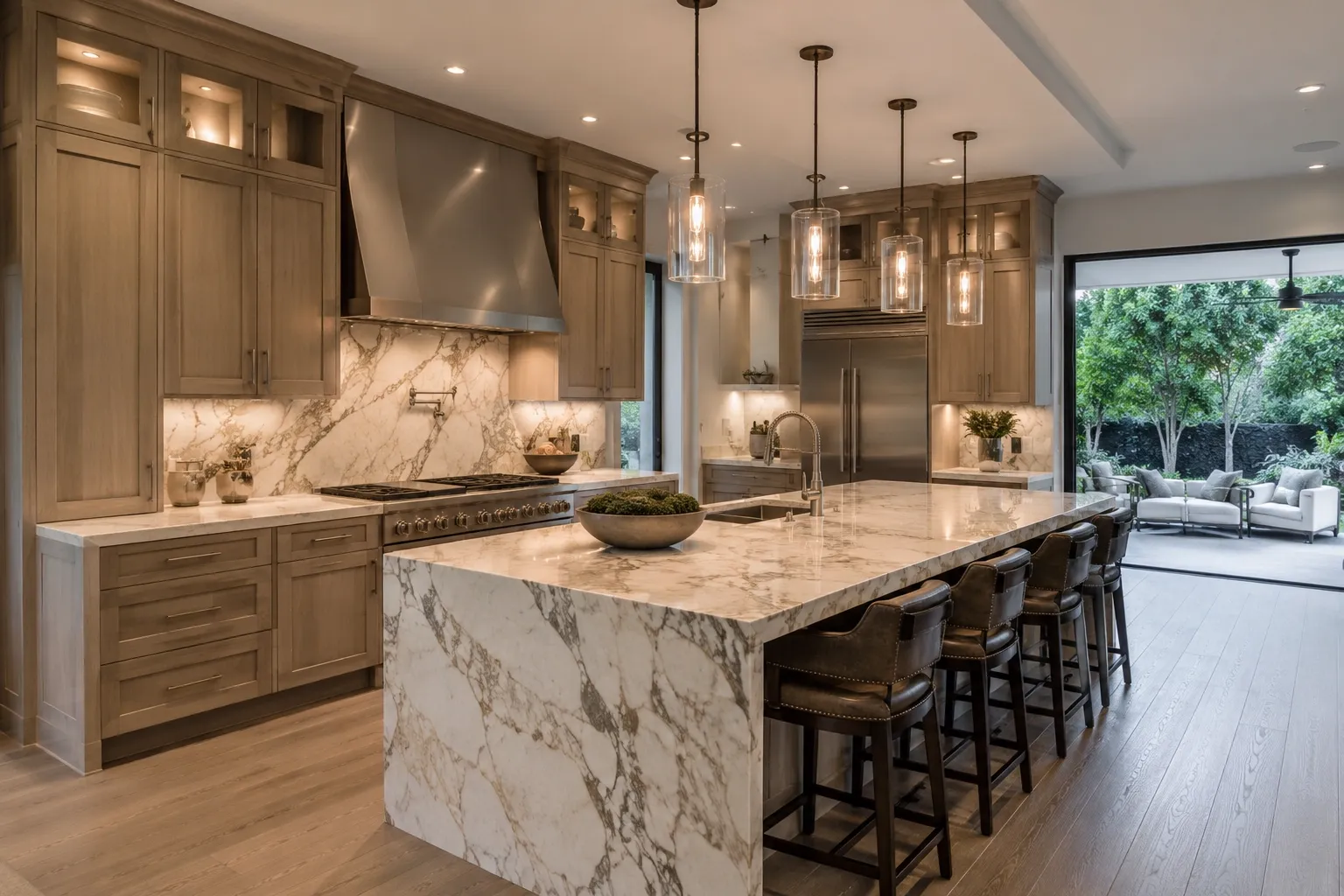
A custom kitchen remodel in Los Angeles typically costs $50,000 to $150,000+, depending on the kitchen size, layout changes, materials, and level of customization. Smaller projects may cost less, while luxury renovations with extensive structural work can exceed this range.
The right budget depends on what you want the kitchen to accomplish. Replacing cabinets and countertops is very different from moving walls, relocating plumbing, upgrading electrical systems, and creating a fully custom layout.
For Los Angeles homeowners, understanding these cost factors before construction begins makes it easier to set priorities and avoid unexpected expenses.
How Much Does a Custom Kitchen Remodel Cost in Los Angeles?
The custom kitchen remodel cost in Los Angeles can vary significantly from one home to another. A practical planning range is $50,000 to $150,000 or more for a custom renovation, with the final price determined by the project's scope and specifications.
A basic custom kitchen remodel may focus on cabinets, countertops, flooring, lighting, and selected fixtures. A more extensive renovation could involve kitchen layout changes, new plumbing locations, electrical upgrades, structural modifications, and premium finishes.
Remodel Level | General Planning Range |
|---|---|
Basic custom remodel | $50,000–$75,000 |
Mid-range custom remodel | $75,000–$110,000 |
High-end custom remodel | $110,000–$150,000+ |
These figures are planning ranges, not fixed quotes. Existing conditions, material selections, project complexity, and labor requirements can change the final cost.
What Affects the Cost of a Custom Kitchen Remodel?
Several components influence kitchen remodeling cost. The most important factor is usually the overall scope rather than one individual product.
Kitchen Size and Layout Changes
Larger kitchens generally require more materials, cabinetry, flooring, lighting, and labor. However, size alone does not determine the budget.
Changing the layout can have a bigger impact. Moving an island, expanding a kitchen, removing a wall, or relocating appliances may require additional construction, plumbing, electrical, and structural work.
Keeping the existing layout can sometimes reduce costs. However, preserving an inefficient layout simply to save money may limit the long-term value of the renovation.
Cabinets, Countertops, and Materials
Cabinetry often represents a substantial portion of a kitchen remodeling budget. Stock, semi-custom, and fully custom cabinets can have very different prices.
Countertops also vary based on material, thickness, edge details, installation requirements, and overall surface area. Natural stone, quartz, and other premium surfaces can increase material and fabrication costs.
Flooring, backsplash tile, hardware, paint, and other kitchen remodeling materials add further expenses. Choosing materials as a complete design package helps prevent costly changes later.
Plumbing, Electrical, and Structural Work
Hidden construction work can significantly affect kitchen renovation costs. Older homes may need electrical improvements, plumbing updates, or structural modifications before new finishes can be installed.
For example, adding a larger island with a sink may require plumbing changes. Installing additional appliances can also require electrical upgrades.
Removing or modifying a load-bearing wall is another major consideration. Structural work should be evaluated before the design is finalized so it can be included in the initial budget.
Appliances, Fixtures, and Finishing Details
Appliances can range from practical options to premium built-in systems. Refrigerators, ranges, ventilation hoods, dishwashers, sinks, faucets, and lighting all contribute to the total kitchen remodel cost.
Small details matter too. Hardware, cabinet organizers, decorative lighting, custom trim, and specialty storage can add up across a complete renovation.

Custom Kitchen Remodel Cost by Project Level
The level of customization provides a useful way to understand kitchen remodel pricing.
Basic Custom Kitchen Remodel
A basic custom remodel generally focuses on improving the kitchen without extensive structural changes. The project may include new cabinetry, countertops, backsplash, flooring, lighting, paint, and selected appliances.
Keeping the existing plumbing and general layout can help maintain a more controlled budget.
Mid-Range Custom Kitchen Remodel
A mid-range renovation usually combines improved functionality with higher-quality materials. Homeowners may change the island, upgrade cabinetry, replace appliances, improve lighting, and make selected plumbing or electrical changes.
This level provides more design flexibility while avoiding some of the costs associated with a full luxury renovation.
High-End Luxury Kitchen Remodel
A high-end kitchen remodel may involve custom cabinetry, premium countertops, specialized appliances, architectural lighting, expanded layouts, and significant structural work.
These projects often require more detailed design coordination because multiple systems must work together. The result can be a highly personalized kitchen designed around the home's architecture and the homeowner's lifestyle.
Where Does Your Kitchen Remodeling Budget Go?
Understanding where your money goes makes the budget easier to manage. A custom kitchen project typically includes several major expense categories:
- Design and project planning
- Demolition and preparation
- Cabinets and storage
- Countertops and backsplash
- Flooring and wall finishes
- Appliances and fixtures
- Plumbing and electrical work
- Structural modifications
- Lighting and ventilation
- Installation and finishing labor
- Permits and project-related requirements
The exact percentage allocated to each category depends on the project. A homeowner prioritizing custom cabinets will have a different budget structure than someone investing heavily in layout changes or premium appliances.

How to Plan a Kitchen Remodeling Budget in Los Angeles
Good kitchen remodeling budget planning starts before materials are ordered or demolition begins. Define the project's priorities first, then allocate money around those priorities.
Set Priorities Before Construction
Decide which improvements matter most. For one homeowner, better storage may be the priority. Another may care more about an open layout, a large island, or premium appliances.
Separating must-haves from nice-to-haves helps you make decisions when costs change during planning.
Include a Contingency for Unexpected Costs
Even a carefully planned renovation can uncover conditions that were not visible before demolition. Older homes may contain outdated wiring, damaged materials, plumbing problems, or structural concerns.
Including a contingency in the remodeling budget provides room for these situations without forcing major design compromises.
Choose Materials Based on Long-Term Value
The cheapest material is not always the most economical choice over time. Consider durability, maintenance, appearance, and how the material will perform under everyday kitchen use.
A balanced approach allows you to spend more on high-impact features while selecting practical options for less noticeable areas.
Ways to Control Custom Kitchen Remodeling Costs
Controlling costs does not mean choosing the cheapest option for every part of the kitchen. It means making deliberate decisions about where the budget creates the most value.
Keep the Existing Layout When Practical
Maintaining the existing plumbing and appliance locations can reduce construction complexity. If the current layout works well, you may be able to invest more of the budget in cabinetry, surfaces, lighting, or appliances.
However, keeping a poor layout is not worthwhile simply for savings.
Invest in High-Impact Features
Focus your budget on features you use every day. Well-planned storage, durable countertops, quality cabinetry, functional lighting, and an efficient work triangle can have a noticeable effect on the finished kitchen.
For design inspiration, homeowners can compare different approaches to modern and traditional kitchen styles before making finish selections.
Avoid Cutting Costs on Essential Work
Electrical, plumbing, structural, waterproofing, and other essential construction work should be handled properly. Cutting corners on these areas can create larger problems later.
Instead, look for savings in optional finishes, decorative details, or features that are less important to your daily needs.
Is a Custom Kitchen Remodel Worth the Investment?
A custom kitchen remodel can be worthwhile when the design improves how you use the home while addressing its functional limitations.
The value is not only in the appearance. Better storage, improved lighting, efficient layouts, updated systems, and durable materials can make the kitchen more practical for everyday living.
A custom approach also allows the design to respond to the home's dimensions rather than forcing the space to fit standard solutions. For homeowners planning a broader renovation, kitchen improvements can also become part of a coordinated whole-home project.
Conclusion
The custom kitchen remodel cost in Los Angeles can range from approximately $50,000 to $150,000 or more, depending on the size, scope, materials, and construction requirements. The most reliable budget starts with a clear understanding of the existing space and the improvements you want to make.
Set priorities early, allow room for unexpected conditions, and focus spending on features that improve both function and long-term usability. If you are ready to discuss the scope of your kitchen renovation, you can contact SAGA Home Builders to begin planning your project.
Frequently Asked Questions
A custom kitchen remodel in Los Angeles generally costs around $50,000 to $150,000+. The final price depends on layout changes, materials, cabinetry, appliances, structural work, and labor.
Cabinetry, structural changes, labor, and premium appliances can each represent major expenses. The most expensive category varies based on the project's scope and design choices.
A custom kitchen remodel can take several weeks to several months. The timeline depends on design complexity, permits, material availability, structural work, and the overall construction scope.
Keeping the existing layout, selecting materials strategically, prioritizing essential improvements, and planning the project carefully can help control costs without compromising critical construction work.