Quartz is often the better choice for homeowners who want low-maintenance countertops, consistent designs, and good stain resistance. Natural stone, such as granite and marble, offers unique patterns and different performance benefits. The right option depends on your budget, cooking habits, design preferences, and willingness to maintain the surface.
When planning a kitchen remodel, comparing these materials can help you choose a countertop that balances appearance, durability, and practicality.
Quartz vs Natural Stone Countertops: Key Differences at a Glance
Quartz is an engineered surface made primarily from natural quartz crystals, resins, and pigments. Natural stone countertops are cut from quarried materials such as granite and marble.
Feature | Quartz | Natural Stone |
|---|---|---|
Appearance | Consistent colors and patterns | Unique natural patterns |
Durability | Durable for everyday use | Varies by stone type |
Stain resistance | Generally high | Depends on stone and sealing |
Heat resistance | Sensitive to excessive heat | Granite generally tolerates heat better |
Maintenance | Usually no sealing required | Some stones require periodic sealing |
Design options | Wide range of colors | Naturally occurring variations |
Durability and Scratch Resistance
Quartz countertops handle everyday kitchen activities well, but they are not scratch-proof. Granite is also highly durable, while marble is softer and more susceptible to scratches and surface wear.
Use cutting boards and avoid dropping heavy cookware on countertop edges to reduce damage.
Stain Resistance and Porosity
Quartz generally resists stains because its engineered composition limits liquid absorption. Natural stone varies: granite often performs well when properly sealed, while marble can be more vulnerable to staining and etching.
Clean spills promptly, especially coffee, oil, wine, and acidic foods.
Heat Resistance and Kitchen Safety
Granite generally tolerates heat better than quartz. Quartz contains resin that can discolor or become damaged when exposed to excessive temperatures.
Use trivets for hot pans on both materials to protect the surface.
Maintenance and Cleaning Requirements
Quartz countertop maintenance is relatively simple. Use a soft cloth, warm water, and a mild cleaner approved by the manufacturer.
Natural stone may require periodic sealing, depending on the material. Avoid harsh chemicals and abrasive cleaners on both surfaces.
Appearance, Colors, and Design Options
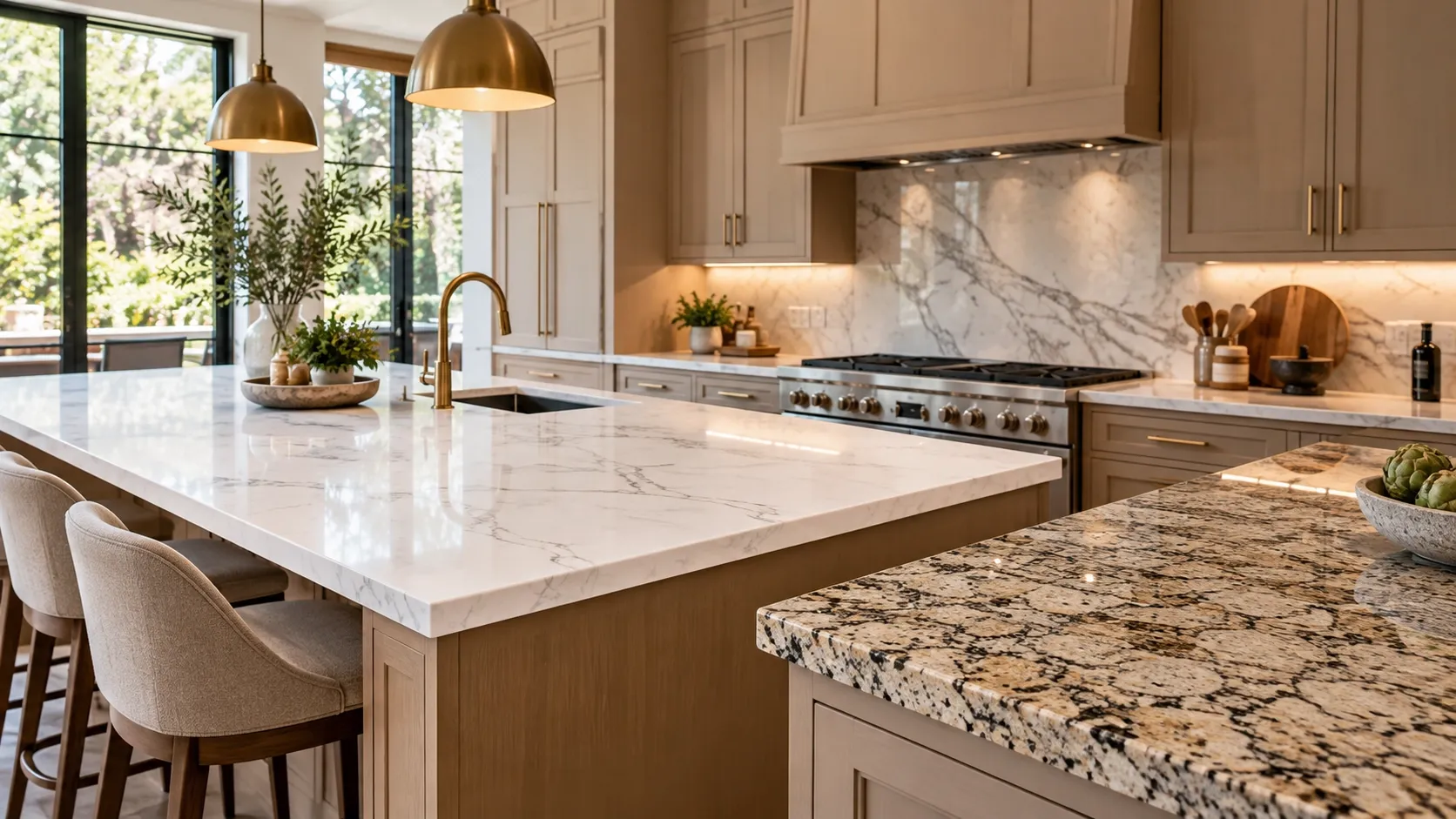
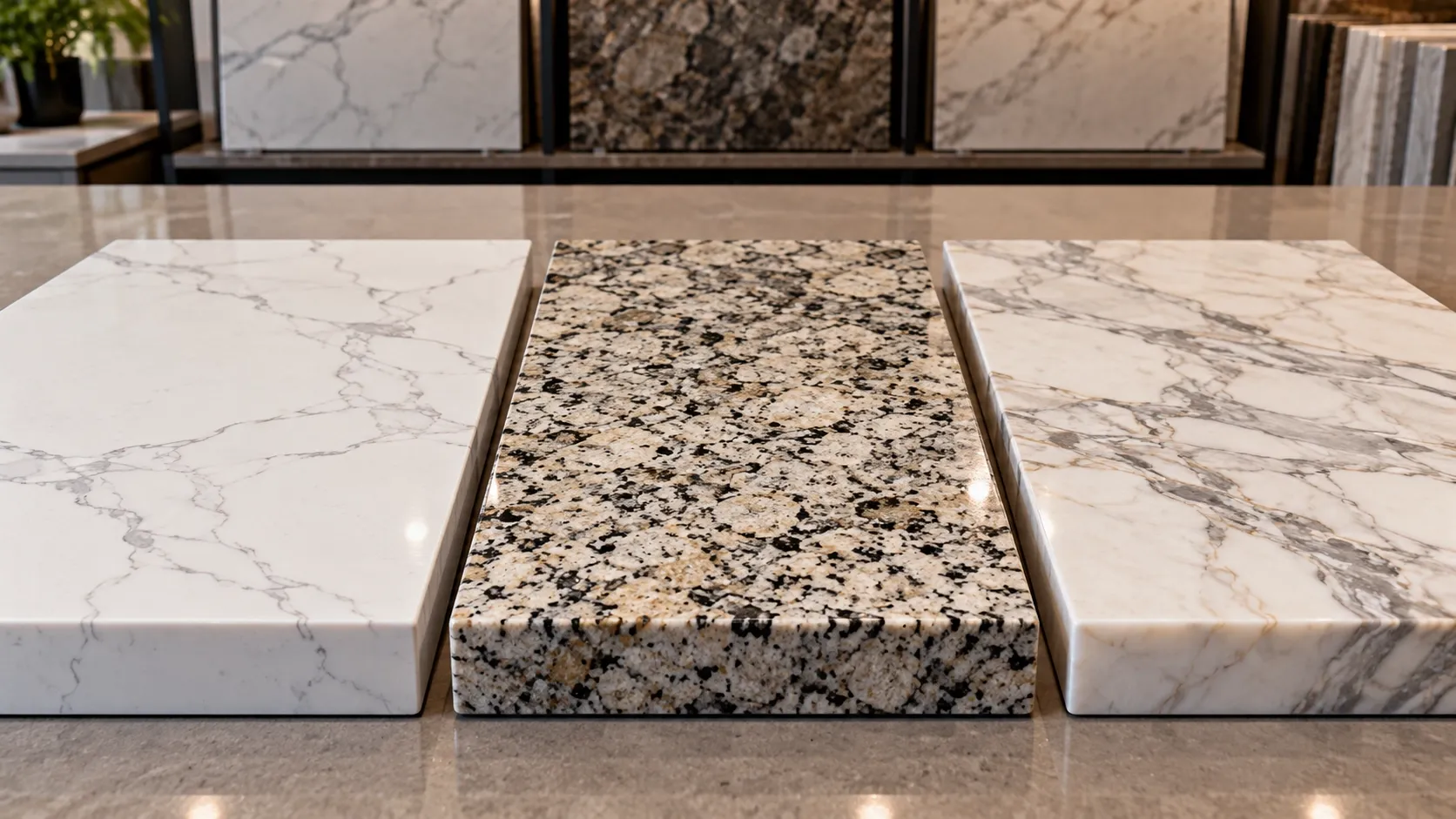
Quartz offers consistent colors and patterns, including designs inspired by marble. Natural granite and marble feature unique variations that make each slab distinctive.
Review actual samples before choosing, especially if the countertop will be a focal point in your kitchen.
Quartz vs Granite vs Marble: How Do They Compare?
Quartz, granite, and marble each offer different benefits. Your decision should consider everyday performance alongside the appearance you want.
Quartz vs Granite Countertops
Quartz generally offers easier maintenance and more predictable patterns. Granite provides natural mineral variations and typically better heat tolerance.
Choose quartz for low-maintenance convenience or granite for natural character and greater heat resistance.
Quartz vs Marble Countertops
Marble is known for its distinctive veining, but it can etch when exposed to acidic ingredients such as lemon juice or vinegar. Quartz generally requires less maintenance and resists acid-related etching better.
Marble suits homeowners who appreciate natural stone and accept its care requirements. Quartz is often more practical for busy kitchens.
Cost of Quartz vs Natural Stone Countertops
The cost of quartz vs natural stone countertops depends on material quality, slab selection, thickness, fabrication, and installation complexity.
Cost Factor | What to Consider |
|---|---|
Material | Brand, stone type, quality, and pattern |
Fabrication | Edge profiles and sink or cooktop openings |
Installation | Labor, transportation, and placement |
Removal | Disposal of existing countertops |
Additional work | Cabinet adjustments, plumbing, or backsplash changes |
Compare complete installation quotes rather than material prices alone. For broader budgeting guidance, see this article on custom kitchen remodeling costs.
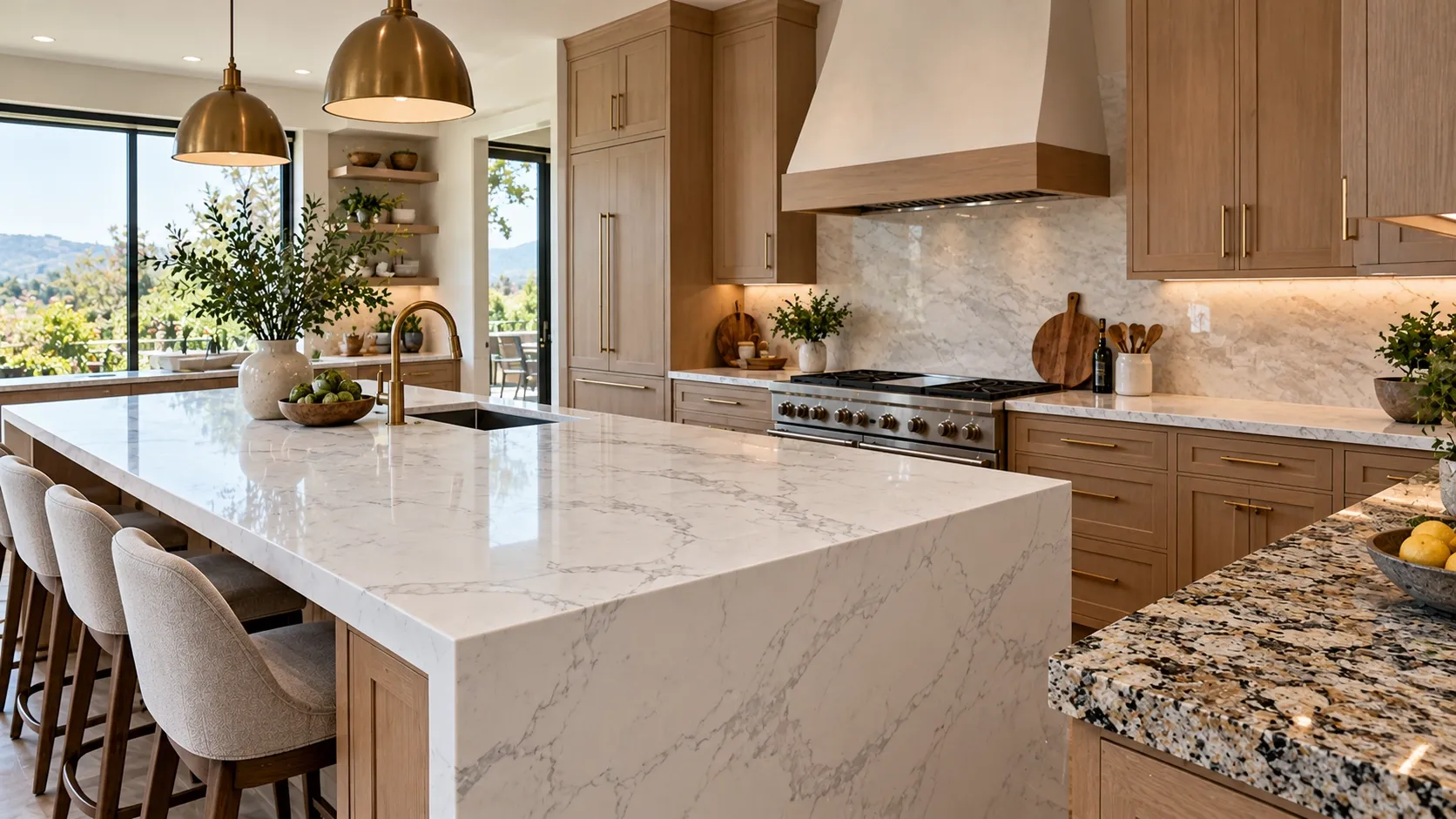
Which Countertop Material Is Best for Your Kitchen?
The best countertop material for your kitchen depends on how you use the space and which features matter most.
- Busy family kitchens: Quartz is often practical because it resists stains and requires little maintenance.
- Frequent cooking: Granite may be a good option because of its heat tolerance.
- Low-maintenance kitchens: Quartz generally requires less routine care.
- Natural, distinctive designs: Granite and marble offer patterns created by nature.
- Luxury kitchens: Either material can work, depending on the desired appearance and budget.
Consider your cabinets, flooring, backsplash, and lighting when selecting a countertop. Exploring different modern and traditional kitchen styles can help you identify a design that suits your home.
Conclusion
Quartz is an excellent option for homeowners who prioritize easy maintenance, stain resistance, and consistent designs. Granite offers natural patterns and better heat tolerance, while marble provides distinctive beauty but requires more care.
Before deciding, compare samples, installation costs, and maintenance requirements. If you are planning a Los Angeles kitchen renovation, contact SAGA Home Builders that can help you coordinate countertop selection.
Frequently Asked Questions
Quartz is generally easier to maintain and offers good stain resistance. Natural stone may be preferable for unique patterns or greater heat tolerance, depending on the material.
No. Excessive heat can damage the resin in quartz countertops. Always use a trivet or heat-resistant pad.
Some natural stones require periodic sealing to reduce liquid absorption. Requirements depend on the stone type and finish.
Both quartz and natural stone can last for many years with proper installation and care. Longevity depends on material quality, usage, and maintenance.